Fragmented Persistence
Object Services (FPOS)
A cloud-native architecture creating an exact "Digital Mirror" of the physical (or even conceptual) world. FPOS fragments data across specialized storage types to enable infinite scalability and context.
*US Patent Pending
Monolith vs. Microservices vs. FPOS
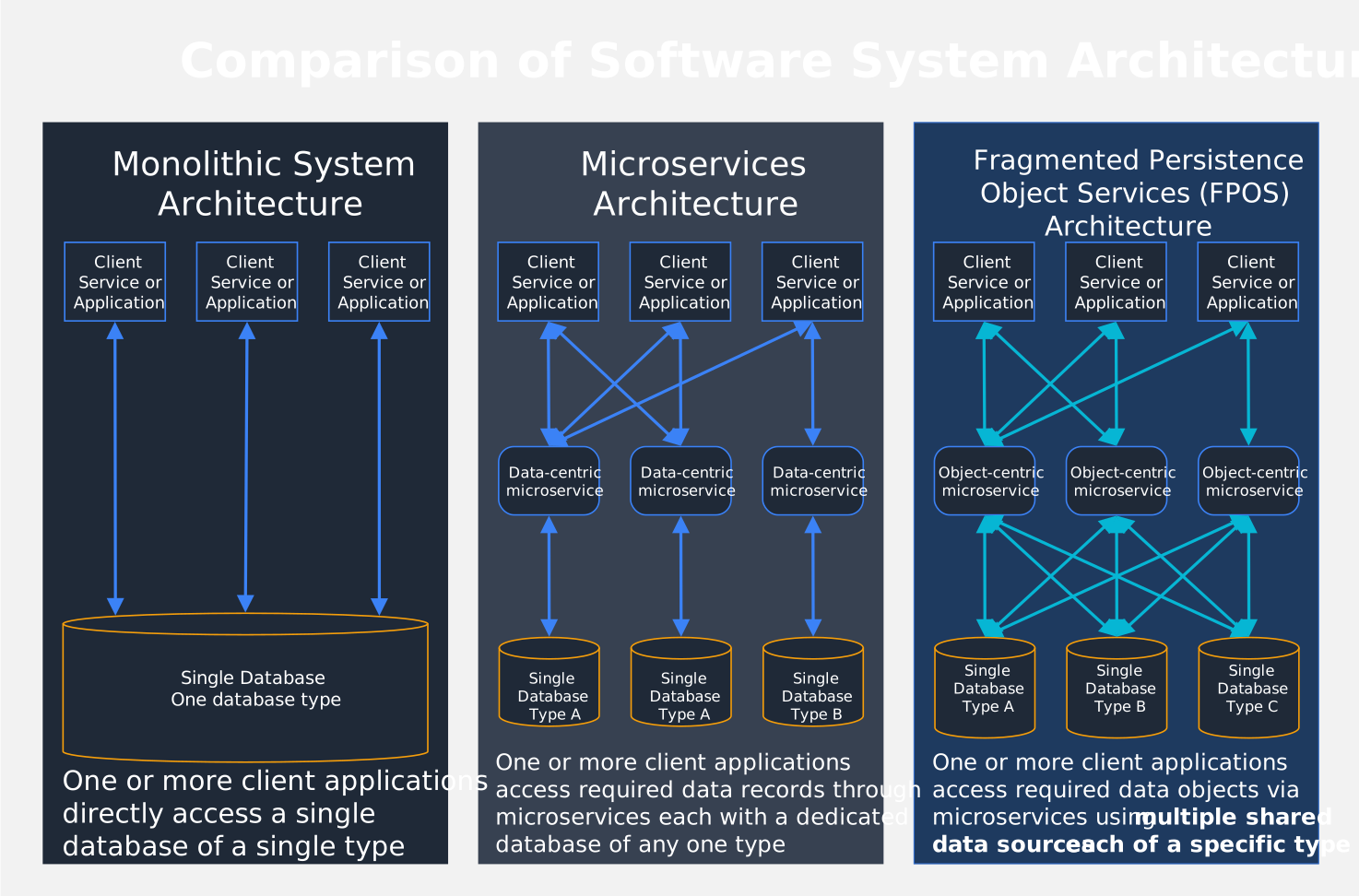
Unlike traditional microservices that use "One-Service-One-Database," FPOS uses object-centric microservices accessing multiple shared data sources.
Clients are in Control
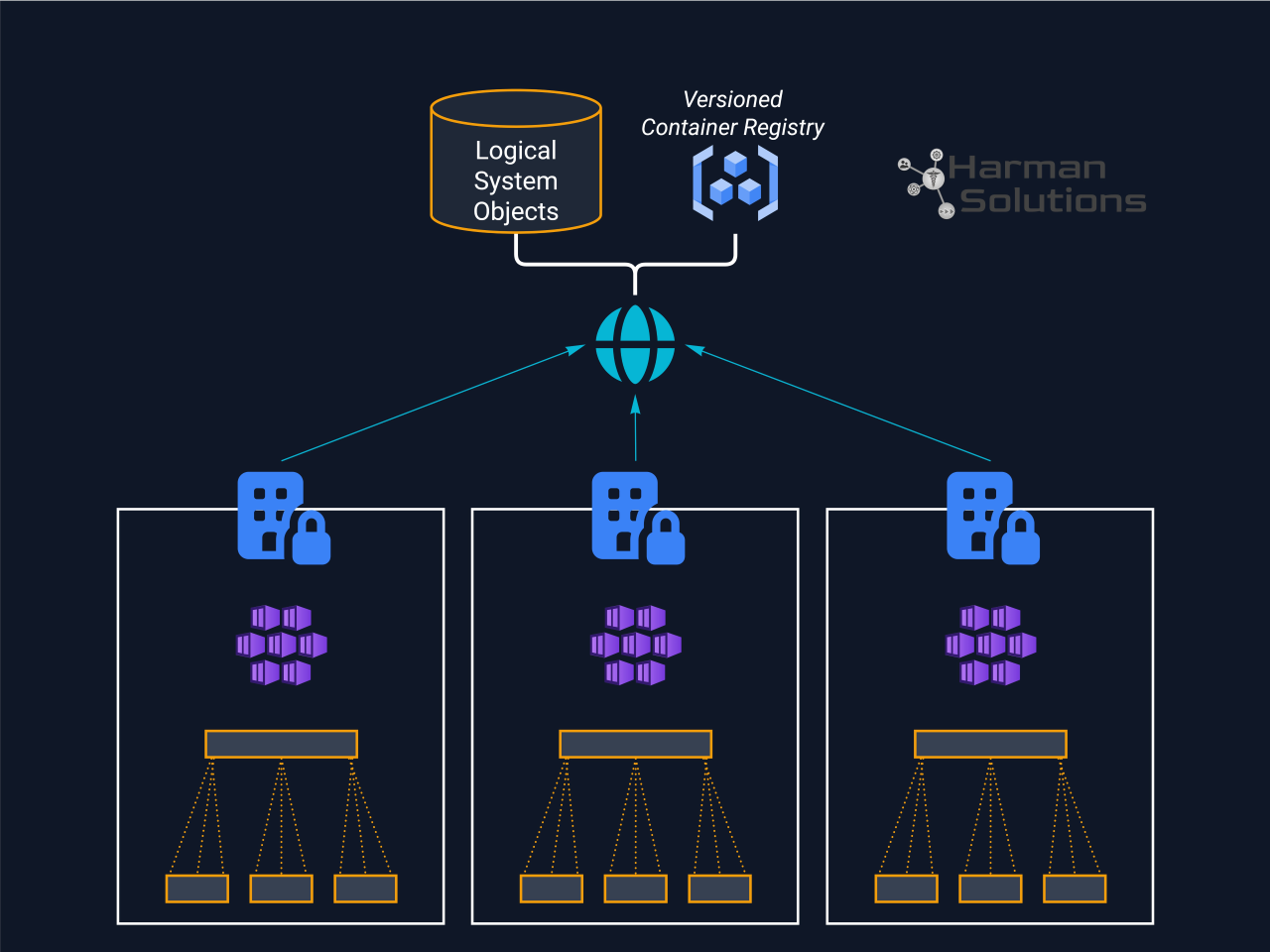
The FPOS architecture enables product function and capability to be pulled into Client AWS environments by the client without product vendor dependency. Clients define and implement their own ontology, processes, knowledge management practices derived from abstract logical objecs which deliver function and product behavior.
- 1. Global Capabilities: Single global repository of version-specific logical objects and distributable microservices deliver function.
- 2. Client Security: Clients pull version updates and new capabilities into their own cloud environments.
- 3. Client Ontology: Clients derive their own classes and object definitions from their version specific logical objects.
Global Delivery - Local Control
The Transactional Data Ensemble
A single "Object" (an experiment, substance, procedure, building) is fragmented across six optimized storage technologies:
NoSQL Fragment

Stores reference objects, global configurations, and definitions. Manages the ontology of the system.
Relational Fragment

Stores discrete object instances, attributes and results using a modified Entity-Attribute-Value (EAV) model.
Graph Fragment

Manages complex relationships, inventory hierarchies, and process definitions (SOPs).
Time-Series Fragment

Massively scalable storage for audit trails, chain of custody, and telemetry.
Object Store Fragment

Handles raw files, documents, and ingress/egress payloads.
Specialty Compute

Dedicated resources for complex data like chemical structures or AI/ML node integration.
FPOS is the architecture powering the Metroknome platform.